
France vs Spain Semifinal Prediction FIFA World Cup 2026
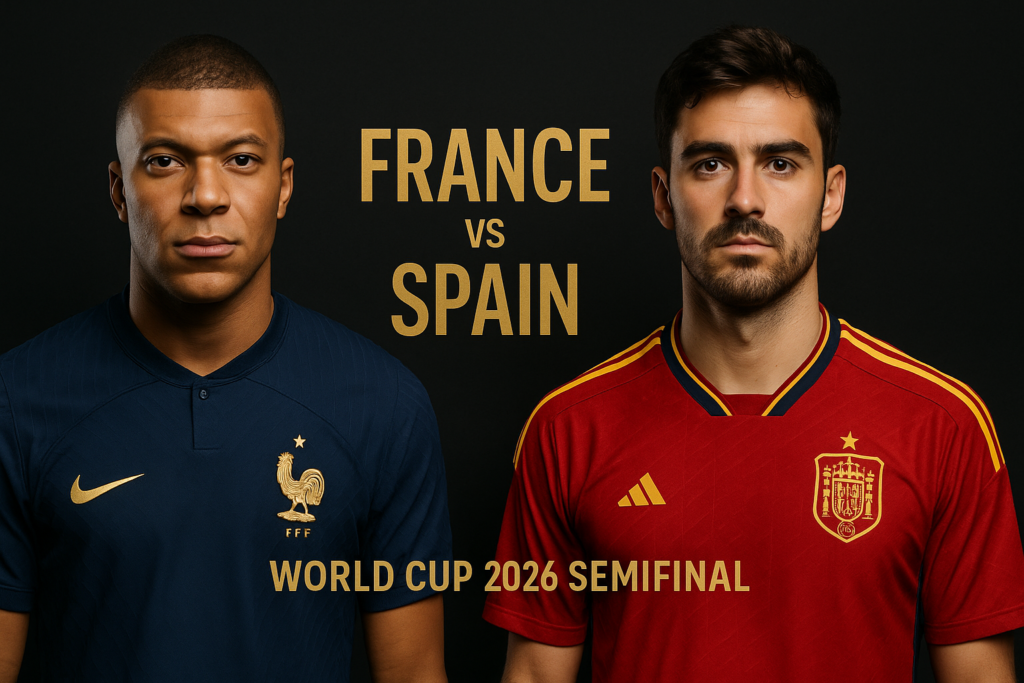
France vs Spain — World Cup 2026 semifinal preview and prediction France vs Spain feels like a coin flip with fireworks attached. France enter the Dallas semifinal as modest favorites, but Spain arrive with enough attacking bite to make Les Bleus sweat. It’s being billed — fairly — as the “final that arrived early,” and whichever team loses here will be the headline about a heavyweight going out too soon. (the “final that arrived early”) Match context and what’s at stake Tuesday in Dallas. Winner goes to the actual World Cup final at MetLife Stadium in New Jersey on July 19. Simple and huge. (Final in New York/New Jersey) France have been steamrolling their way through the bracket — six wins to this point — while Spain took care of business against Belgium in the quarters to set up this blockbuster. (You’ve seen the highlights: Spain beat Belgium 2–1 in the quarterfinals.) (Spain beat Belgium 2–1) There’s also that lovely bit of timing: France could be playing for a place in the final on Bastille Day, which is a narrative piece sportswriters will chew on whether you like it or not. (Bastille Day subplot) What the form and numbers say France’s headline stat is tidy: six wins from six and, importantly, they haven’t conceded in the knockout stage. That’s not luck — it’s a setup that points to a team organised, pragmatic, and hard to break down. (France’s clean-sheet streak) At the other end of the pitch, Kylian Mbappé has been doing Mbappé things — eight goals in the tournament so far. That kind of form gives France a single-player X-factor who can snap a game open in an instant. (Mbappé leading the way) Spain, meanwhile, have averaged close to two goals per game at this World Cup. They’re not just possession for the aesthetic — they’re winning and scoring. That combination keeps them very much in this conversation. Head‑to‑head and the historical backdrop Oddly, this is only the second time France and Spain have met at a World Cup despite both nations having deep World Cup histories (17 appearances apiece). The last World Cup meeting was in 2006 — Spain led early through David Villa’s penalty, but France came back 3–1. Tiny sample size, big history. (second World Cup meeting) What matters more now is the generational framing: this is Mbappé’s France against a refreshed, modern La Roja that have reinstalled themselves near the top of international pecking orders as European champions. The tone is less “revenge” and more “two contemporary heavyweights.” (champions vs finalists) Tactical storylines — how this game will likely be won and lost Mbappé vs Spain’s structure If you’re France, you don’t overthink it: get the ball to Mbappé in dangerous positions and hope his combination of pace and finishing does the rest. That’s been a reliable plan — eight goals don’t lie. But against Spain, the challenge is limiting transition moments and stopping the one-on-one sprints that have punished other teams. Spain’s defensive answer isn’t smash mouth. It’s possession and structure. Keep the ball, pull France out of shape, and reduce the chances for those explosive counters. If they can do that for large stretches, they force France into longer, more dangerous build-ups where Spain’s defenders can rally. (possession as defence) Defense vs attack balance This is the classic stylistic clash: a compact French defense that’s hard to score against versus a Spanish attack that’s been averaging nearly two goals per game. Which will impose itself? That will be the match’s spine. Coaches on both sides will likely be conservative early. Semifinals are brutal for players who make mistakes. Expect tactical probing for the first 20–30 minutes, and then the game opens a touch — if it opens at all. Odds, models, and what bettors and analysts are saying Most markets give France the small edge to reach the final. FanDuel’s “to advance” market, for instance, priced France around -144 and Spain +118 — roughly a 55–45 split in favour of France. You’ll see similar mid‑50s numbers across other books. (FanDuel to advance numbers) Digging into models, the numbers vary but cluster in the same neighborhood. One machine‑learning model cited by Syracuse.com put France’s regulation win probability at about 40.3%, Spain at 32.4%, and a draw around 27.3% — again, France with the modest edge. (machine‑learning model) Market sentiment around goals is split. Books generally set the total at 2.5 goals. Some analysts lean Over — CBS’s Martin Green is “leaning Over 2.5” largely because Spain have been scoring at a high clip and Mbappé is a goals magnet. Others, and some sharp money, tilt Under because semifinals tighten up and France’s knockout clean sheets argue for a lower‑scoring game. (CBS leans Over) One interesting market nugget: Syracuse’s breakdown suggested “Both teams to score: Yes” implied probability is about 59%, while other operators (Hard Rock Bet, for example, according to previews) price “No” as the favorite. That split neatly sums up the core tension — both teams can score, but France’s defensive run says maybe they won’t. (both teams to score split) Injuries and selection — what we actually know Short answer: the preview material I’m working from focuses on form, odds, and matchups rather than detailed late-breaking squad news. None of the main previews list big absences, and bookmakers aren’t pricing either side like they’re missing core starters. If you want definitive injury snaps, that needs an up‑to‑the‑minute check before kickoff. (CBS on squad focus) My prediction — the one I’d shout about in a pub Okay, time to be that mate who makes a call and then watches nervously. Markets, models, and the style clash all point to a close game. France have the tiny edge — most books put them around 55–60% to reach the final — but Spain aren’t underdogs in any meaningful sense. Pack your drama meter. Scoreline? A 2–1 France win feels most in line with the available evidence. Why that score: France’s knockout defence suggests Spain
Argentina vs Switzerland Preview World Cup Quarterfinal
Argentina vs Switzerland — who’s going through? A friendly, straight‑talk World Cup quarterfinal preview Saturday night in Kansas City. Winner goes to the semifinals, loser packs a bag. On paper, this one reads like Argentina’s to lose — but any World Cup knock‑out that includes Switzerland deserves respect. Here’s the short version: most markets and pundits expect Argentina to win in regulation, but Switzerland’s defense and recent penalty resilience mean they won’t be rolled over. For the bits and pieces that matter — kickoff time, form, matchups and a clear prediction — read on. Match basics — when and where this gets decided This quarterfinal is set for Saturday, July 11, with a 9 p.m. ET kickoff at Kansas City Stadium in Missouri, a place listed with roughly 69,045 seats. That’s where Argentina and Switzerland will meet for a World Cup quarterfinal slot. The fixture and details are laid out in the tournament schedule, which is why it’s fair to say this is one of the eight knockout matches getting everyone’s attention that weekend. Kansas City is hosting. How they got here — the recent form and mood Argentina: still the team everyone fears Argentina didn’t exactly sneak through. They beat Egypt in the Round of 16 and came through as one of the tournament’s clear big guns. That’s reflected in how the market treated them before that game: in some coverage Argentina were priced extremely short to advance and still favored to win in regulation, which tells you how strongly bookmakers and bettors view them. You can see that reflected in the pre‑match pricing and discussion. Bookmakers backed Argentina. And yes, Messi still matters. In the Egypt buildup he had unusually short odds to score in a knockout (that same pre‑match piece flagged odds around -170 for Messi to find the net), which is more than trivia — it’s a reminder that Argentina’s creative hub and finishing threat still centers on him. That keeps the defensive puzzle for Switzerland particularly awkward. Switzerland: compact, organised and battle‑tested Switzerland’s path was a little messier and tougher to read. They scraped past Colombia on penalties in a tight Round of 16 tie, which tells you two things: they’re hard to break down, and they’ve already been through a draining mental and physical test. The match details and progression to the quarters are documented in the tournament roundup. Switzerland advanced via penalties. Under the surface their numbers look tidy. A betting preview noted Switzerland had conceded just three goals to that point in the tournament and carried a modest expected‑goals profile over recent internationals — roughly 1.17 xG against per game over their last 10 — which squares with the image of a defence‑first unit that surrenders little and forces low‑scoring affairs. Their defensive record was loudly highlighted. Key players and the tactical chessboard Messi v Xhaka: the headline duel Everything starts with Lionel Messi for Argentina. Opponents still have to build a plan around limiting his influence; that is the match’s gravitational centre. The setup for this quarterfinal was even framed simply as “Messi and Argentina” vs “Granit Xhaka and Switzerland,” which neatly sums up the tactical stakes: creative genius against organised midfield leadership. That line comes from the quarterfinal previews. On paper, Argentina want to be front foot: more possession, probing through Messi and whoever’s playing off him. Switzerland want to be compact, disciplined, not get stretched and threaten to take the game to its limit — even penalties if necessary. Styles clash: what each coach will be worrying about Argentina: break lines, overload the final third, and make Messi decide games — that goal threat is baked into how everyone expects them to play. The market and pundits have repeatedly assumed Argentina will outscore opponents. Pre‑match betting pieces and fan previews leaned heavily on that idea. Switzerland: stay narrow, protect the box, force low value chances and, if needed, rely on nerves and penalties. Their low goals‑conceded tally and cautious xG profile point to a team that prefers attrition over spectacle. Analysis of their defensive solidity made that clear. What the markets and pundits say If you want the mercenary angle: most reputable previews and betting outlets have Argentina as the favorite. One mainstream sportsbook preview put the three‑way moneyline around Argentina -145, draw +260 and Switzerland +425, and explicitly backed Argentina on the moneyline, in part because Switzerland had just played the long, wearing penalty tie. BetMGM’s preview laid out those numbers and that reasoning. Beyond the numbers, the talking heads have been consistent: Argentina and Spain remain the two big favourites among the quarterfinalists, which implicitly puts Argentina‑Switzerland among the more one‑sided ties left in the bracket. That framing cropped up in televised and online preview shows. Quarterfinal breakdowns repeatedly made that point. And because the internet refuses to be purely serious: yes, a light‑hearted clip even had a cat “choose” between the teams — entertaining, not analytical, but proof the match is a headline item. Entertainment exists. Why Argentina are favorites — and where Switzerland can sting them There are three straightforward reasons the markets favor Argentina. They carry heavier attacking talent and a clear go‑to creator in Messi; odds before the Egypt game showed how much attention bettors pay to that. Bookmakers’ Messi lines. They’ve had a smoother path recently — Argentina’s Round of 16 win looked more straightforward than Switzerland’s penalty slog. World Soccer Talk covered both routes. Experts and sportsbooks rank them among the tournament favourites, which matters in how both public opinion and tactical approaches settle. Pundit consensus. Switzerland’s chance isn’t fantasy. Their defensive numbers and mentality are real — conceding only three goals to this point and carrying a low xG against suggests a side that frustrates attackers rather than outplays them. A disciplined Swiss performance can make Argentina impatient and bring the match into a tighter margin, where a single counter or set piece could decide things. SI’s betting preview emphasised that solidity. Injuries and squad news — what’s notable
Haaland Kane Quarterfinal Clash Norway vs England Preview
Norway vs England: why this Norway–England quarter-final feels like a coin flip Two superstars. A first-ever quarter-final for Norway. England coming off a heroic, nervy win at the Azteca. On paper, markets nudge England as favourites — but if Erling Haaland turns up the way he did against Brazil, this tie is chaos waiting to happen. That’s why this one matters: it’s less a mismatch and more a high-stakes, near-coin-flip with a very loud striker on one side. Match basics & what’s at stake This is the Norway vs England quarter-final at Hard Rock Stadium in Miami Gardens, kicking off late on Saturday 11 July UK time. It’s not just another knockout: it’s Norway’s first ever World Cup quarter-final, a milestone they only reached after a seismic upset over Brazil. That upset is why this fixture feels huge — Squawka called it “one of the most anticipated quarter-finals in World Cup history,” largely because the headline is a straight shootout between Haaland and England’s lethal duo of Harry Kane and Jude Bellingham. How they got here Norway’s shock run Norway didn’t cautiously crawl into this stage — they detonated a major one by beating Brazil 2–1 in the round of 16. Erling Haaland scored twice in that game and has been the tournament’s most prolific markswoman to this point. The narrative around Norway is simple: Haaland has carried them. Yahoo Sports’ pre-match write-up even predicted that Brazil match correctly, calling it a 2–1 Norway win with Haaland on the scoresheet, which fed the “don’t sleep on Norway” storyline. England’s rugged route England’s path has that feel of endurance rather than explosion. They edged Mexico 3–2 at the Azteca — historically one of the hardest places to win — and managed the business despite being reduced to ten men for much of the second half after Jarell Quansah was sent off. Harry Kane converted a penalty in the 60th minute to settle the tie, and USA Today described that comeback as “heroic,” arguing that surviving Azteca a man down proves a new resilience under Thomas Tuchel. Key players and numbers Let’s not dress the obvious up: this is a striker duel and then some. The tournament’s leading scorers tell half the story. Haaland (7 goals) — the clearest single threat on the pitch. Harry Kane (6 goals) — still right there, lethal from penalties and open play. Jude Bellingham (4 goals) — the midfield engine who supplies chances and finishes them too. Leo Østigård (1 goal) — Norway’s set-piece threat from the back. Those raw tallies underline why Squawka says Haaland “can win any game on his own,” but they also show England’s multi-headed scoring threat: take Haaland out of a game and England still have Kane and Bellingham to create problems. Tactics, matchups and the X‑factors If you want a headline tactical summary: Haaland is the single big swing; England are the steadier machine built on depth. How that plays out depends on a few small but decisive details. Haaland vs England’s shape Norway’s plan is obvious and effective: get Haaland the ball in dangerous places and exploit any sluggish defending. When Haaland is hot — and he was against Brazil — single moments decide matches. England’s answer will be organisational. Squawka’s analysis describes England as having “the deeper squad and calmer defence,” which matters because you don’t stop Haaland by simply outnumbering him; you need discipline and cover from midfield. England’s mental edge after Mexico The Azteca win matters beyond the result. Beating Mexico away, down to ten men, and still getting across the line feels like a test that cements belief. Several USA Today writers leaned on that idea when favouring England — the logic being that if Tuchel’s side can survive that mess, they can survive a Haaland storm. Momentum vs structure This is the classic underdog vs favourite split: Norway have momentum and a single match-winner; England have structure and multiple high-end players. The match will probably be won or lost in transitional moments — counter-attacks, set pieces, and those first ten minutes when nerves are raw. What the models, markets and experts say No single voice dominates the prediction space. The picture is: England are slight favourites in markets and models, but a decent chunk of pundits won’t bet against Haaland. Squawka’s model gives England about a 65% chance to advance, arguing they have the higher floor because of squad depth. Kalshi-style market numbers reported by Squawka show England favoured at roughly 51–52%, Norway around 23–24%, with draws near 26%. Expert panel split — USA Today ran a prediction panel that was almost evenly divided: some pick Norway (several writers chose 2–1 Norway), others pick England 2–1, and one predicted penalties after a 2–2 draw. That mix tells you everything: models and markets like England’s steadiness; plenty of intelligent writers still won’t bet against Haaland’s red-hot form. Key tactical questions to watch live Can England contain Haaland in transition? If Norway play direct and Haaland gets half a yard, the scoreboard changes quickly. Will England’s back line be rotated? Jarell Quansah’s red card in the Mexico game creates a suspension question and a potential reshuffle in central defence. How aggressive will Norway’s full-backs be? If they commit forward, England’s midfielders — Bellingham especially — might enjoy time and space to punish them. Set pieces and penalties — both teams have aerial threats and reliable spot-kick takers; small moments could swing extra time or penalties. My read — a fan’s take I’d call this one razor-close. If you make me pick, I’d edge England 2–1 in 90, with the understanding that the margin is tiny and the game could easily flip if Haaland plays like a man possessed. Why England? Depth. Bellingham’s form gives them a second consistent goal threat beyond Kane, and Tuchel’s management through a crisis at the Azteca suggested a mental toughness this group lacked in past tournaments. Why Norway? Haaland. He’s a finishing machine — seven goals isn’t a fluke —
Spain vs Belgium World Cup quarterfinal pick and analysis
Spain vs Belgium — who’s going through? My World Cup quarter-final pick Friday’s quarter-final at SoFi Stadium isn’t just another knockout game — it’s the kind of European throwdown that feels loaded with storylines. Spain come in tight and tidy, Belgium arrive buzzing after a goal surge, and oddsmakers have already picked a favorite. If you want the short version right away: I’m leaning Spain, but this one won’t be a walk in the park. Read on and I’ll explain why, how it might play out, and my exact score prediction. Why Spain are the clear favorites Let’s be blunt: form matters, and Spain have it. They’ve not conceded a single goal in five matches at this World Cup — yes, five matches, zero goals — an elite defensive run you don’t just stumble into. That kind of shutout streak changes the whole feel of a team. It buys you time, forces opponents to take risks, and makes late-game nerves less lethal. They also scraped by Portugal with a dramatic finish: substitute Mikel Merino smashed home a winner in the 90th minute, which says two things. One, they keep their heads when the game is tight. Two, their bench can still make a difference at the death. Both are massive in knockout football. (See the reporting on that finish from USA Today.) Belgium’s wake-up call — and the limits Belgium’s résumé coming in is entirely different: they exploded in the round of 16, beating the United States 4-1. That was their best attacking performance of the tournament and it featured Charles De Ketelaere scoring twice. Finally, a Belgium team that looks like it can truly hurt opponents up front. But context matters. The leap from beating the US in a big win and dismantling Spain’s defensively disciplined side is significant. Belgium’s attack can be potent — we saw that — yet Spain’s form and shutout streak make them the obvious underdog in most people’s books. That’s not to say Belgium can’t win. It’s to say the path to victory demands more consistency than they’ve shown so far. (DraftKings’ recap of Belgium’s results is a good summary of that performance.) Where the match will be won Defence vs momentum At its simplest, this is a battle between Spain’s defensive solidity and Belgium’s newfound attacking confidence. Spain’s recent results suggest they’re hard to break down; Belgium’s last game suggests they can blow teams away when it clicks. Which side imposes its identity will decide the match. Late-game composure Knockouts come down to a couple of moments. Spain’s 90th-minute winner over Portugal tells you they’ve got the nerves to close tight games. Belgium’s big win implies they can seize the moment when a game opens up. If the match stays tight, put a tick next to Spain. If Belgium get an early goal and the game opens, their confidence could turn this into a shootout. Key names to watch Mikel Merino — his 90th-minute winner shows he can be the kind of substitute who changes the game. Spain’s depth matters. Charles De Ketelaere — scored twice against the US and is clearly in form. When he’s on, Belgium look more dangerous. Spain’s collective defence — not a single name, but the unit. Their five-game shutout streak is the headline and the real opponent Belgium must beat. There aren’t reliable sources in the material provided about confirmed lineups or injuries, so I’m not pretending to know who’ll start. If you want lineups, we’ll need official team sheets close to kick-off. Odds and what they tell us Bookmakers have already placed their bets. DraftKings opened Spain at -160 on the 90-minute moneyline and put their price to advance at -320, while Belgium was priced at +450 to win in regulation and +245 to qualify. That’s a market saying Spain are expected to be the steadier side across 90 minutes and beyond. Yahoo echoed the same lean, reporting BetMGM’s opening line that also favored Spain. Odds like these aren’t prophecy — they’re the market’s best guess based on form, injuries (if known), and public money. In this case, the market’s working off Spain’s shutout streak and Belgium’s more volatile performances. (See the numbers reported by DraftKings and the opening line noted by Yahoo.) My prediction and scoreline Okay, here’s the pick. I’ll take Spain to win, 2-0 after 90 minutes. Why that score? Spain’s defensive record suggests they’re likely to keep Belgium quiet — a clean sheet feels plausible. Belgium’s attacking burst against the US shows they can score, but I don’t see them doing it twice against a side that’s already stopped five opponents. Spain’s late composure and bench depth (Merino’s winner being the perfect example) make a single-opportunity win believable. Add in the market leaning toward Spain, and that combination makes a 2-0 result my realistic, not flashy, choice. Does that mean Belgium can’t win? No. Tournaments are weird. A single switch, a mistake, or a moment of brilliance from De Ketelaere could flip everything. But if you’re asking for a sober probability-backed call, Spain’s defensive form and the betting market put them firmly ahead. Why I’m not shouting it from the rooftops I’ll be blunt about limits. The research we have doesn’t include injury news, squad confirmations, or any last-minute tactical tweaks. Those things matter hugely in knockout football. A late injury or a surprise starting XI change could swing the tie — and I won’t pretend otherwise. Also, match context can shift fast. Belgium’s 4-1 demolition of the US was real and meaningful. It showed they can explode offensively. If they get an early goal and force Spain into chasing, the dynamics change quickly. So while I’m backing Spain as the safer pick, this isn’t a lock. That’s part of what makes this fixture fun. What to watch in the game How Spain handles the first 20 minutes — if they’re calm, they’ll likely control the tempo. Belgium’s approach after conceding — do they regroup and press immediately, or do they
France vs Morocco quarterfinal showdown in Boston July 10
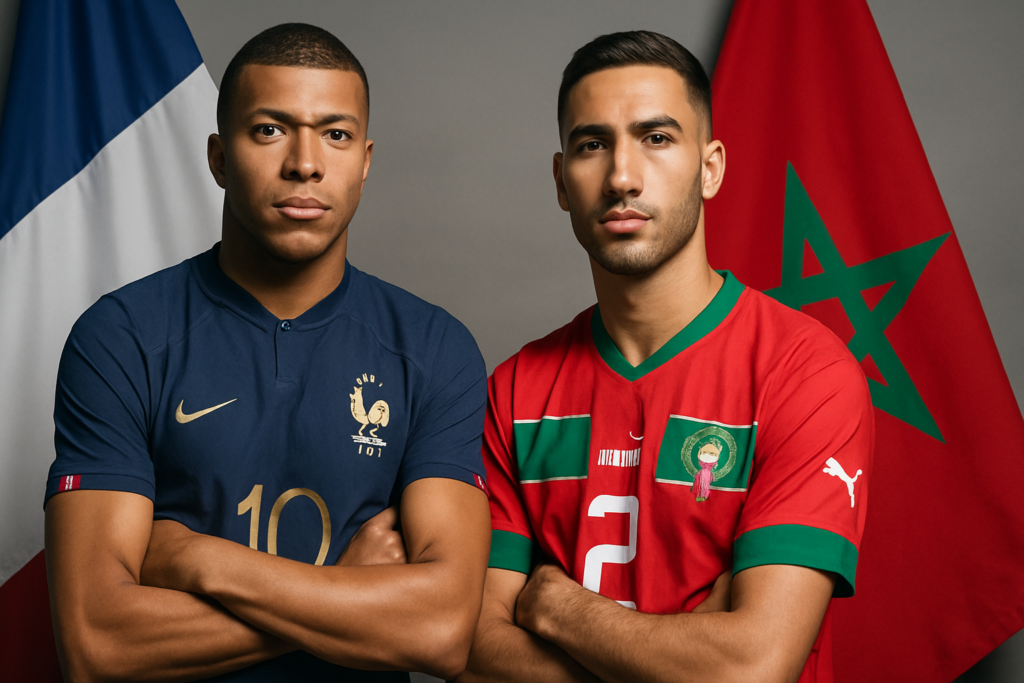
France vs Morocco — the quarter‑final everyone’s talking about Right, quick nutshell: this is the kind of knockout tie that gives you goosebumps. France roll into Boston as heavy favourites — led by Kylian Mbappé’s ridiculous form — while Morocco arrive as the tournament’s tried‑and‑tested underdog, built to frustrate and spring shocks. One side is hunting a third straight World Cup semi‑final, the other is trying to extend its own little saga from 2022. Stakes are high, and the smart money says it’ll be tight rather than cinematic. Why this match actually matters The game is a straight knockout — win and you’re in the last four; lose and your World Cup is over — and it’s happening in Boston on Tuesday 9 July. That’s not just another fixture: if France get through, they’ll have reached the semi‑finals for a third consecutive tournament, which is rare air for a national team. Those are the kind of runs teams use to shape an era. The schedule makes that clear. But the other angle is the storylines. For Morocco this is a continuation of the underdog narrative that began in Qatar 2022 and suddenly makes them one of the most interesting teams in knockout football. For neutrals, it’s the classic: superstar firepower versus compact collective grit. France: electric front foot, questions at the edges Attack first, ask questions later France haven’t sneaked up on anyone in this tournament — they’ve been listed as one of the favourites and for good reason. They’ve scored freely: 14 goals in five matches so far, which is the sort of number that makes opposing managers wince. A lot of that has come through Kylian Mbappé, who’s sitting on seven goals and is the obvious match‑decider every time the ball nears the box. The tournament numbers back that up. Ousmane Dembélé has also chipped in — four goals — and together those two form a genuinely dangerous front line. It isn’t just raw talent; France have been clinical and, in patches, ruthless. Defense and balance It’s one thing to have scorers, it’s another to be solid at the back. Analysts have consistently described France as not only the most dangerous attacking team but also the meaner defence compared to Morocco across this tournament. That combination is why many previews expect France to control the match while keeping it tidy rather than exploding into a goalfest. Squawka’s match preview builds its prediction on that exact idea and leans to a controlled French win. So the picture on France is familiar: elite attacking talent, confidence in depth, and an expectation that they’ll manage tempo and chances. That’s why most models favour them. Morocco: the defensive fist in a velvet glove How they got here Morocco’s path to Boston has felt tougher on paper and in practice. They picked up a gutsy 1–1 draw with Brazil in the group — a result that probably did a lot for their belief — and they thumped co‑hosts Canada 3–0 in a game where Azzedine Ounahi scored twice. Those sorts of results show a team that can both survive and deliver when the moment demands it. Their route is well documented. There’s also a reminder that Morocco aren’t a one‑player trick. While they won’t match France’s star power, they have attacking options — players like Ismael Saibari have been flagged as goal threats — and they’ll look to make the match awkward for France. Identity: compact, stubborn, battle‑hardened Everything you read about Morocco repeats the same adjectives: tenacious, resilient, battle‑hardened. That’s not just fluff — it’s a team built on discipline and defensive organisation. Most previews expect Morocco to keep the scoreline down because they do the small, ugly things well: they close spaces, they don’t panic, and they make opponents earn every chance. That’s the kind of profile that turns one‑goal games into real headaches for favourites. Head‑to‑head and historical context If you like history, France have had Morocco’s number: unbeaten in six meetings with four wins and two draws. Their most recent World Cup clash was the 2022 semi‑final in Qatar, a 2–0 victory for France that helped propel them to the final that year. Those results are part of why France come into this match as the clear favourites — there’s precedent and pedigree. The stats zone spells out the record. Still, head‑to‑head doesn’t decide a knockout match on its own. Familiarity can help Morocco too — they know what kind of threats France pose and they’ve already shown they’re not intimidated by big names. Tactics: how each team should approach Boston What France will try to do Expect France to play on the front foot without getting reckless. Their aim will be to control possession, use Mbappé as the main outlet, and let Dembélé stretch the pitch. In theory, that should unpick Morocco if France are allowed to settle into the game and create clear cut chances. What Morocco need to do Defend in numbers, limit the space between lines, and look to counter. Morocco’s best hope is to stifle the midfield tempo, make the French full‑backs work, and then hit on transitions where players like Saibari and Ounahi can get in the box. Most analysts expect Morocco to try to keep things low‑scoring and hang in there — the style that’s served them well. Predictions, markets and how I’d bet my pint Right now the public and models tilt heavily to France. Squawka’s model and many previews back a France win, leaning to a low‑scoring, controlled result. TheBetting markets mirror that: Squawka cites bet365 prices with France around –175 in 90 minutes, the draw +290, and Morocco +525. Those are sizable gaps. Squawka’s preview includes the odds and model. That said, there are dissenting voices. GamblingNews lists Morocco to win at +275 as their primary pick — a proper underdog punt. It’s the kind of view that’s riskier but potentially rewarding, and it shows why Morocco still have real supporters in the conversation. So what’s the best
Switzerland vs Colombia Round of 16 Who Will Win?
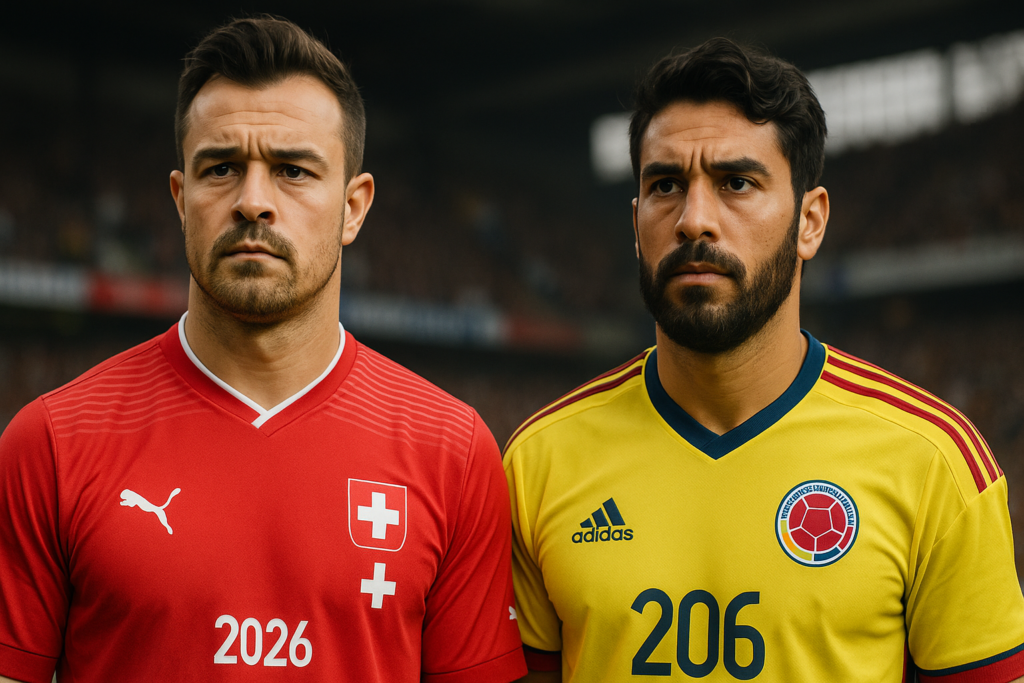
Switzerland vs Colombia — the Round of 16 | Who Will Win? Simple version: this is going to be tight, tense, and probably decided by a single moment. Both sides arrive in Vancouver unbeaten, the experts are split, and most previews expect a low-to-mid scoring game that could easily need extra time. If you like chess games that suddenly explode, this is your match. Why this one matters It’s a World Cup Round of 16 tie at BC Place in Vancouver on Tuesday, July 7, 2026 — win and you’re in the quarterfinals, lose and the tournament’s over. Kickoff is shown as 4 p.m. ET / 1 p.m. PT for U.S. viewers, and 9 p.m. BST for the U.K. crowd. Fixture details and kickoff are on the schedule for fans who need to set reminders. Both teams are unbeaten so far in the tournament, which matters a lot. Unbeaten teams in knockouts are rarely sloppy — they don’t get there by accident — and that’s why the pundits keep describing this as a tactical, close tie. Expect coaches trying not to lose, rather than playing to outscore the opponent from minute one. The previews keep flagging the first goal as hugely important and say extra time is a realistic possibility if neither side can break the deadlock in 90 minutes. What the previews are actually saying There’s no single narrative here — different respected previews land in different places, but most agree on the overall tone: tight and tactical. Covers leans to Switzerland and expects a higher-event game, favouring over 2.5 goals. Standard’s preview picks Colombia to win 2–1 but calls it “tough to call,” and warns extra time could be needed. SI also forecasts a close one-goal game, writing Colombia 2–1. SportyTrader takes the opposite angle on scoring — they lean under 2.5 goals. So: some people expect goals, others expect a cagey 1–0 or 1–1 that goes beyond 90 minutes. That split is useful — it tells you the match will be decided by small margins, and your experience of it will likely hinge on timing and one-off incidents rather than an avalanche of chances. Team news and fitness There aren’t huge injury lists coming out of the previews we’ve got — which is a nice change. The key Switzerland update is that Denis Zakaria is expected to play through a knock, while Luca Jaquez is doubtful. That’s the concrete squad information available right now. WhoScored’s match preview is the source for the Zakaria/Jaquez notes, which is worth keeping in mind if you follow Switzerland’s midfield stability. There’s no comparable confirmed Colombia injury detail in these previews. Why those two names matter Zakaria’s presence, even if he’s not 100 percent, matters for Switzerland’s balance. He’s the kind of midfielder who can cover ground and steady things when the game gets tense. Jaquez being doubtful means Switzerland might have to tweak personnel on the day, which could affect how aggressive they are. Tactical keys — what will decide this game? Given what the previews say, here are the match-up points that will probably define the outcome. First goal significance: Everyone’s repeating it — whoever scores first gains a huge psychological and tactical advantage. That matters when coaches are reluctant to open up and chase the game. Midfield control: With Zakaria managing a knock, Switzerland’s ability to dominate the middle could be slightly compromised. Colombia will want to exploit that and force transitions rather than sustained possession battles. Set pieces and moments: In tight knockout ties, corner kicks, free kicks and substitutions often supply the decisive moments. Don’t expect a soft, comfortable finish. The likely shape Call it tight, shape-first football. Both coaches will want to avoid defensive errors. If one team presses more and wins quick turnovers, the match opens up and you start creeping toward that over-2.5 line that some previews predict. If neither side wants to give ground, we’re heading to extra time. Odds and markets — a quick, responsible look The market shows Colombia as a slight favorite in the 90-minute outcome, roughly around +130 to +131. Switzerland sits somewhere around +240 to +270, and the draw is roughly +210 to +225 in the previews we’ve reviewed. There’s also chatter about an “advance” market where Colombia are favored to progress overall, even if the result after 90 minutes is unsettled. If you want the raw market snapshot, you can see the recent odds and context in the Covers preview, and the advance/progression commentary is discussed in one of the preview videos available on YouTube. Quick, practical note: if you’re thinking about betting, keep stakes small and remember the nature of knockout football — a single incident can change everything. So who’s the pick? Here’s the honest reading: the majority of the high-profile written previews we looked at slightly favor Colombia to win narrowly — Standard and SI both said 2–1 to Colombia — but Covers put Switzerland ahead and expected more goals, while SportyTrader thinks the game will produce fewer than 2.5 goals. That split tells you the outcome is genuinely uncertain. Bookmakers make Colombia the marginal favorite, and that’s consistent with the previews tilting that way on balance. My take (pure opinion, no insider scoop): Colombia have a marginal edge on paper because the market and several previews back them, and because being a slight favorite often reflects momentum and tournament form. But Switzerland are compact and organised, and if Zakaria manages the knock without being a liability, they can absolutely make life difficult. I’d expect a one-goal game — possibly 2–1 Colombia, or 1–0 Switzerland — and I wouldn’t be shocked if we see extra time. What to watch during the match First 15 minutes: See which team is willing to press and take control. If either side looks dominant, the game could open earlier than expected. Substitutions around 60–75 minutes: Managers often change the game here in knockouts. Who comes on could tilt the game toward extra time or a late winner.